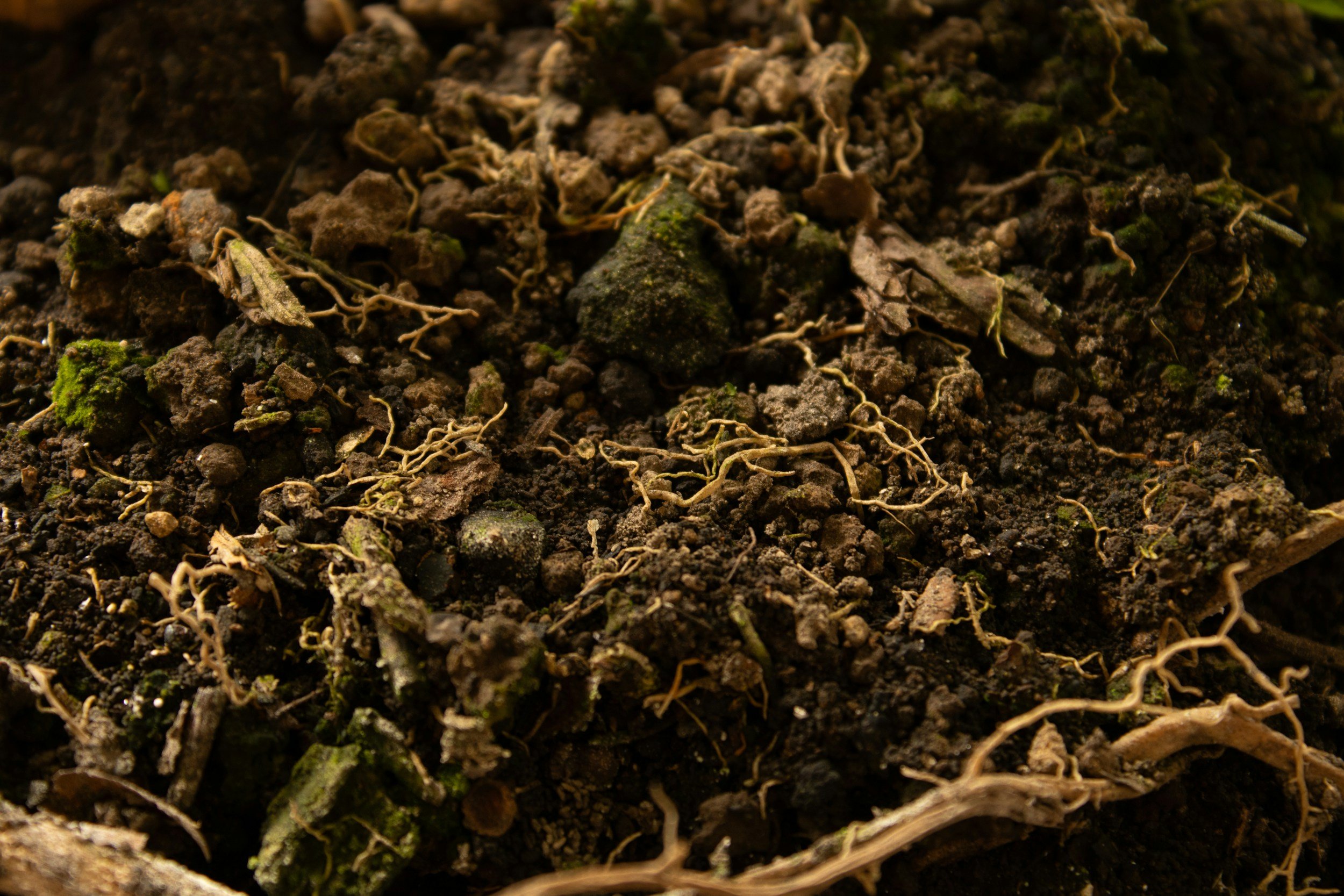
There is a question that sits underneath almost every diagnosis, every treatment plan, every story of chronic illness: why this person, why now?
Two people are exposed to the same pathogen. One gets sick; the other doesn't. Two people follow the same protocol. One recovers; the other plateaus. Conventional medicine tends to locate the answer in the pathogen, the gene, the malfunctioning organ — the thing that went wrong. But there is an older and, I would argue, more complete question: what was the ground in which that illness took root?
That ground is the terrain.
A Brief History of a Forgotten Argument
In the 19th century, two French scientists were quietly at odds over one of the most consequential questions in the history of medicine. Louis Pasteur argued that disease was caused by external microorganisms — germs — that invaded an otherwise neutral body. Antoine Béchamp argued that the body's inner environment determined whether those organisms could take hold and cause harm. Pasteur won. Germ theory became the foundation of modern medicine, and with it came antibiotics, vaccines, and a century of extraordinary advances in acute and infectious disease.
What we lost in that victory was the terrain.
The story goes that Pasteur, on his deathbed, conceded: the microbe is nothing, the terrain is everything. Whether or not he actually said it, the sentiment points toward something that vitalist and biological practitioners have never stopped working with — and that systems biology is now, in its own language, rediscovering.
What the Terrain Actually Is
The terrain is not a metaphor. It is a biological reality with a specific physical substrate.
At its most concrete, the terrain is the extracellular matrix — the gel-like medium that surrounds every cell in your body. This is where nutrients are delivered, where waste is carried away, where immune signals travel, where hormones and neurotransmitters find their receptors. Every cell in your body lives in this medium. Nothing that happens inside a cell happens without first passing through it.
When the extracellular matrix is clear, well-nourished, and flowing, cellular communication is precise and responsive. The body can mount an immune response, clear a toxin, repair a tissue, regulate inflammation. This is physiology doing what physiology does — not because nothing has gone wrong, but because the ground is healthy enough to respond.
When the matrix is congested — burdened with metabolic waste, environmental toxins, unprocessed emotional residue, the long accumulation of stress and poor drainage — that communication degrades. Signals get lost or distorted. The immune system becomes dysregulated. Tissues that should be repairing aren't. Inflammation that should resolve doesn't. The body is still trying to do what it's designed to do. But the ground has become inhospitable to its own healing.
This is where chronic illness lives — not primarily in the pathogen or the malfunctioning gene, but in the terrain that has become too compromised to restore itself.
Terrain vs. Diagnosis
This is where terrain-based thinking diverges most sharply from conventional medicine — and where it can feel disorienting at first, especially if you've spent years accumulating diagnoses.
A diagnosis names what is happening. The terrain asks why it keeps happening here, in this body, in this particular way.
Two people with the same diagnosis — say, hypothyroidism, or irritable bowel, or chronic fatigue — may have arrived there through entirely different terrain pictures. One may have a liver that has been overburdened for decades. Another may have a gut that never fully recovered from early antibiotic exposure. A third may be carrying inherited susceptibilities that have been waiting for the right set of stressors to express. The diagnosis is the same. The terrain is different. And therefore the path toward restoration will be different.
This is why terrain-based practice is necessarily individualized. There is no protocol for hypothyroidism, because hypothyroidism is not the primary question. The primary question is: what is this person's terrain, what has compromised it, and what does it need to begin restoring itself?
Diagnosis still matters — it tells us something real about where the body is struggling. But it is a description of the landscape, not a map of how to tend it.
Physiology Over Pathology
One of the quietest but most important shifts in terrain-based thinking is a reorientation of attention — away from what is broken, toward what is trying to work.
Conventional medicine is organized around pathology: identify the malfunction, suppress or remove it. Terrain-based practice is organized around physiology: understand the body's inherent intelligence, remove what is obstructing it, and support the conditions under which it can do its own work.
This is not naive optimism. Chronic illness is real, and it can be profound and complex. But the body is not your enemy. The symptoms that seem like malfunctions are often the body's best available attempt to cope with a compromised terrain — inflammation that is trying to clear something, fatigue that is enforcing rest, pain that is signaling a boundary. When we work with those signals rather than against them, we learn something. And when we address the terrain rather than suppressing the symptom, we change something that lasts.
Inherited and Acquired Terrain
The terrain you are working with is not entirely of your own making.
Some of it was given to you — inherited susceptibilities, constitutional tendencies, the epigenetic imprints of your ancestral line. In classical homeopathy, this inherited layer is understood through the concept of miasm, a framework I explore in its own entry. In biological medicine more broadly, it shows up as constitutional type — the characteristic ways a given person tends to respond to stress, to illness, to the demands of living.
The rest is acquired — shaped by everything that has happened to your body over the course of your life. Early infections and how they were treated. Dietary patterns. Environmental exposures. Emotional and relational history. The cumulative load of what your drainage and detoxification systems have been asked to process.
Both layers matter, and both are workable. The inherited terrain sets certain tendencies, but tendencies are not destiny. The acquired terrain reflects the history of a living system that has been doing its best with what it had. Understanding both is how we begin to understand what this particular body needs.
The Soil Metaphor
I return often to soil — not as a decorative image but as a genuinely instructive parallel.
Healthy soil is not merely the absence of toxins. It is a living system with structure, microbial diversity, mineral richness, moisture, and drainage. It supports growth not by forcing it but by providing the conditions in which growth becomes possible. When soil is depleted — compacted, stripped of its biology, over-farmed, chemically burdened — it cannot support the same life. You can plant the same seed in depleted soil and healthy soil and get entirely different results.
The body works the same way. Therapeutic interventions — whether homeopathic, nutritional, botanical, or otherwise — are not magic bullets. They are inputs into a living system. Their effectiveness depends enormously on the quality of the ground they are working in. This is why terrain restoration is not preliminary to treatment — it is treatment. Preparing the ground is the work.
How Terrain Shapes Treatment
If the terrain is the ground of illness, it is also the ground of healing. This shapes everything about how I work.
Rather than beginning with a symptom and selecting a remedy to address it, I begin by asking what the terrain looks like — which drainage channels are congested, which organ systems are under the greatest load, what the inherited constitutional picture suggests, what the history of illness and treatment reveals about accumulated burden.
From that picture, a sequence emerges. Not a protocol applied uniformly, but a responsive plan that follows the terrain's own logic — opening drainage before pushing detoxification, supporting the most burdened systems first, working in layers that the body can integrate rather than flooding it with interventions it cannot process.
The terrain also determines how quickly things can move. A terrain that is relatively clear and responsive will often show meaningful shifts within weeks. A terrain that has been compromised for decades, through many layers of suppression and accumulated load, requires patience, sequencing, and a longer view. This is the nature of chronic illness — and it is why the work I do is organized around year-long containers rather than short-term fixes.
The Four Terrain Types
Not all terrain is compromised in the same way. Over years of clinical practice, I have come to work with four characteristic terrain types — patterns of susceptibility, drainage burden, and constitutional expression that tend to cluster in recognizable ways.
Understanding your terrain type is one of the first orienting steps in the work we do together. It shapes which systems we prioritize, which modalities are most likely to resonate, and what the arc of restoration tends to look like for someone with your particular picture.
[The four terrain types are explored in depth through the Four Terrain Types quiz — a good place to begin if you're curious about your own terrain.]
An Invitation
If this way of seeing the body resonates with you — if the question of why here, why now feels more alive than the name of your diagnosis — you may be someone who would do well in terrain-based care.
The work I do with clients inside Regenerative Landscapes begins exactly here: with a careful, unhurried look at the terrain. What it has been carrying. What it needs. What becomes possible when the ground is prepared.
If you'd like to explore whether we're a good fit, the application is where that conversation begins.